Captain's Outburst: Analyzing Bruno Fernandes' Frustration After Man Utd's Dramatic Draw
The Weight of the Armband: Leadership Under Fire
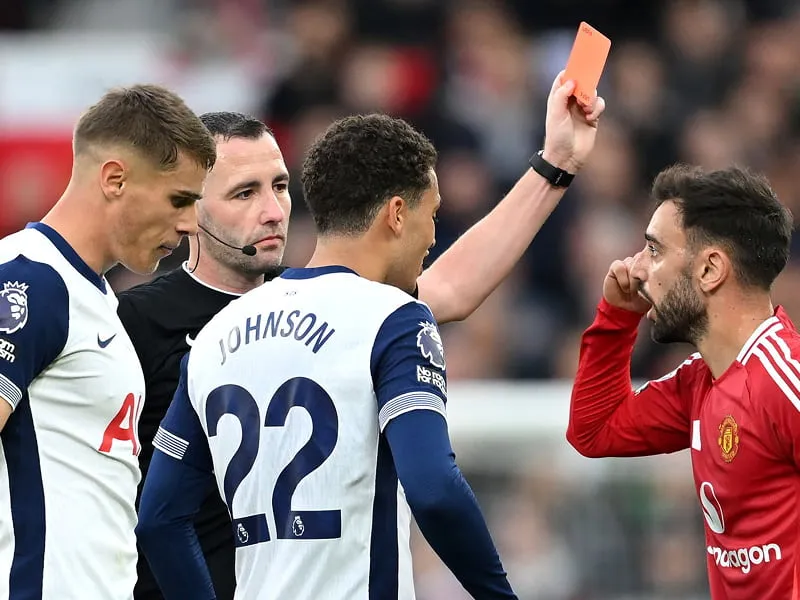
In the immediate aftermath of a pulsating 4-4 draw with Bournemouth, the cameras at Old Trafford did not pan to celebrating players or relieved managers. Instead, they focused squarely on one man: Bruno Fernandes, the captain of Manchester United. Standing in the center circle long after the final whistle, Fernandes was a picture of raw, uncontained frustration, angrily gesturing and visibly distraught despite having just played a central role in a match brimming with spectacle. This reaction, more than any statistic, laid bare the current state of a club struggling to reconcile moments of individual brilliance with crippling systemic flaws. While the scoreline suggests a thrilling spectacle for the neutral—a Premier League classic with eight goals—for Fernandes and United, it felt like two precious points thrown away, a microcosm of a season plagued by inconsistency.
A Rollercoaster of Emotions: Reliving the Eight-Goal Saga
The match itself was a narrative of lost control and missed opportunities. United, showing positive intent, seized an early advantage through a well-taken goal by Amad Diallo. However, the pattern of the season reasserted itself almost immediately. Bournemouth’s equalizer, followed by a controversial incident involving Antoine Semenyo and Diogo Dalot, shattered any early momentum. United retook the lead before halftime, thanks to Casemiro, only to then suffer a catastrophic lapse in concentration at the very start of the second period, conceding twice in quick succession to suddenly find themselves behind.
The response, spearheaded by Fernandes, was characteristically spirited. The Portuguese maestro delivered a moment of sheer quality, curling a magnificent free-kick into the net to level the score. The stadium erupted again minutes later when Matheus Cunha struck, putting United back in front and seemingly on course for a hard-fought victory. Yet, the defensive vulnerabilities that have haunted Ruben Amorim’s side all season resurfaced at the worst possible moment. A late, avoidable goal from Bournemouth’s Eli Junior Kroupi sealed the final 4-4 result, transforming the roar of triumph at Old Trafford into a groan of collective disappointment.
Beyond the Scoreline: Systemic Issues and Statistical Warnings
Fernandes’ fury on the pitch was not simply about a single conceded goal; it was the culmination of witnessing the same costly errors repeat themselves. The statistics from the game tell a revealing story. While United managed an impressive 25 shots, a deeper look shows they created only two clear-cut, big chances. This points to a recurring issue: dominance in possession and territory without the decisive, clinical edge or defensive solidity to translate it into secure victories.
The team’s structure, whether a back four or five, has consistently looked fragile. Goals are being conceded in clusters—a fatal six-minute spell in the second half against Bournemouth mirrored previous collapses. For a captain like Fernandes, who embodies a relentless will to win, this lack of game management and defensive discipline is profoundly frustrating. His post-match anger was a public manifestation of the internal standards he is trying, and currently failing, to enforce within the squad.
The Captain's Burden: More Than Just Passion
Bruno Fernandes’ reaction must be understood in the context of his leadership role. Appointed captain to instill a new mentality, he finds himself leading a side that can be brilliant and baffling within the same match. His visible fury is a double-edged sword. On one hand, it demonstrates a passionate investment in the club’s fortunes that fans demand; it refuses to accept mediocrity or shrug off dropped points as "just one of those games."
On the other hand, it raises questions about the emotional temperature of the squad and the effectiveness of such displays. As teammates approached him to offer consolation, he remained in his own world of frustration. The challenge for Fernandes and manager Ruben Amorim is to channel this intense desire for perfection into a more controlled, consistent performance on the pitch. The captain’s standards are clear, but the team’s ability to meet them consistently is not.
The Manager's View: Acknowledging the "Details"
In his post-match comments, manager Ruben Amorim pinpointed the core issue, moving the discussion beyond formations. "A lot of good things, but a lot of things to work [on]," he stated. "We are not winning games sometimes in the details. It's not because it's a back four, back three, back five. It's the details that we need to work on, understand the momentum of the game and we need to be clinical."
This analysis aligns perfectly with the source of Fernandes’ frustration. Amorim highlighted the same six-minute period in the second half where the game spun out of control, a lack of concentration eerily similar to previous matches. He praised the effort and the ability to fight back, but underscored that true progress is halted by these critical, recurring lapses. The manager’s task is to transform these "details"—transitional defending, set-piece organization, game intelligence—from weaknesses into strengths. Until he does, his captain’s anger will likely flare again.
Looking Ahead: A Crucial Test of Mentality
The immediate aftermath offers little respite for Manchester United. The schedule presents a daunting trip to face a high-flying Aston Villa, a test that will brutally expose any lingering fragility. The week of training Amorim referenced is crucial, not just for tactical drilling, but for managing the squad's psychology.
The key takeaway from the Bournemouth drama is not that United lacks fight—they demonstrated ample character to lead three times. The issue is a lack of controlling intelligence and defensive resilience to see games out. For Bruno Fernandes, the journey from here is about transforming his visible anger into a more steely, demanding leadership that elevates the collective focus of those around him. The talent within the squad is undeniable, but as this eight-goal thriller proved, talent alone is not enough to build a successful campaign. The road to the Champions League is paved with consistency, a commodity that remains elusive for the Red Devils. How Fernandes and Amorim manufacture it will define their season.